Why Commercial Dry Mops Are the Smartest Cleaning Investment for Your Business?
Most people don’t think twice about how a floor gets cleaned. But if you manage a commercial space, a clinic, a school, a retail store, or a warehouse, you know that floors tell a story. A dusty, grimy floor says something about the business. A clean one says something else entirely.
The tool behind most well-maintained commercial floors? A dry mop. Simple, unglamorous, and genuinely one of the most practical cleaning investments you can make.
So What Exactly Is a Dry Mop?
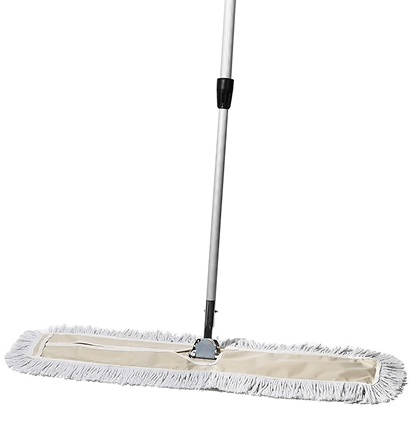
A commercial dry mop is a flat-headed tool designed to pick up dust, hair, fine debris, and particles from hard floors, with no water, no chemicals, and no mess. The mop head works by attracting and holding particles through surface contact rather than pushing them around like a broom does.
That last part matters more than people realize. Brooms scatter. Dry mops collect. If you’ve ever swept a floor and watched the dust cloud settle right back down, you understand the difference.
Why Commercial Grade Matters
There’s a reason the label says commercial. A dry mop built for home use will fall apart quickly under the daily demands of a business environment.
Commercial cleaning dry mops are wider, sometimes up to 60 inches across, which means you’re covering serious ground per pass. They’re built to handle repeated washing and heavy daily use without the fibers breaking down or the frame warping. And they’re designed to perform consistently across shifts, not just for a one-time clean.
If you’re using a residential tool in a commercial space, you’re replacing it too often and probably not getting the clean you think you are.
They Work on Almost Every Hard Floor
This is one of the things that makes dry mops genuinely useful across different types of businesses. They handle:
Hardwood and engineered wood, where water damage is a real risk, and dry maintenance is always preferred. Tile and stone, where dust and debris collect in textured surfaces and grout lines. Vinyl and laminate, the go-to flooring in most commercial spaces, are perfect for dry mopping. Concrete is common in warehouses and back-of-house spaces where both fine dust and larger debris are regular issues.
The mop head material matters here. Microfiber works beautifully on polished and smooth surfaces. Heavier blends are better for rougher floors and larger debris.
The Practical Case for Dry Mops in a Business Setting
Here’s what it comes down to operationally. Cleaning staff time costs money. Setup and breakdown time costs money. Supplies cost money.
Commercial cleaning dry mops eliminate the bucket, the chemicals, the drying time, and the back-and-forth. A wide mop head covers a large floor in significantly less time than a broom or traditional mop would. And because the heads are washable and reusable, often for hundreds of cycles, the cost per clean over time is very low.
It’s not a complicated calculation. Less time per clean, lower supply costs, longer equipment life. For a business running multiple cleaning cycles a day, that adds up.
Keeping Your Dry Mop in Good Shape
Even the best mop underperforms if it isn’t looked after. A few things to stay on top of:
Shake or vacuum the mop head after each use before the debris has a chance to compact into the fibers. Wash the heads regularly; most are machine washable, which makes this easy. Let them dry completely before storing, so you’re not dealing with mildew or odor buildup. Swap out the head when it starts to mat down or loses its pick-up ability. Holding onto a worn-out mop head is a false economy.
None of this is complicated. It’s just consistency.
Finding the Right One for Your Space
A hospital needs something different from a restaurant kitchen. A school hallway has different demands from a logistics floor. The size of the space, the type of flooring, the frequency of cleaning, and the kind of debris all matter when you’re choosing the right tool.
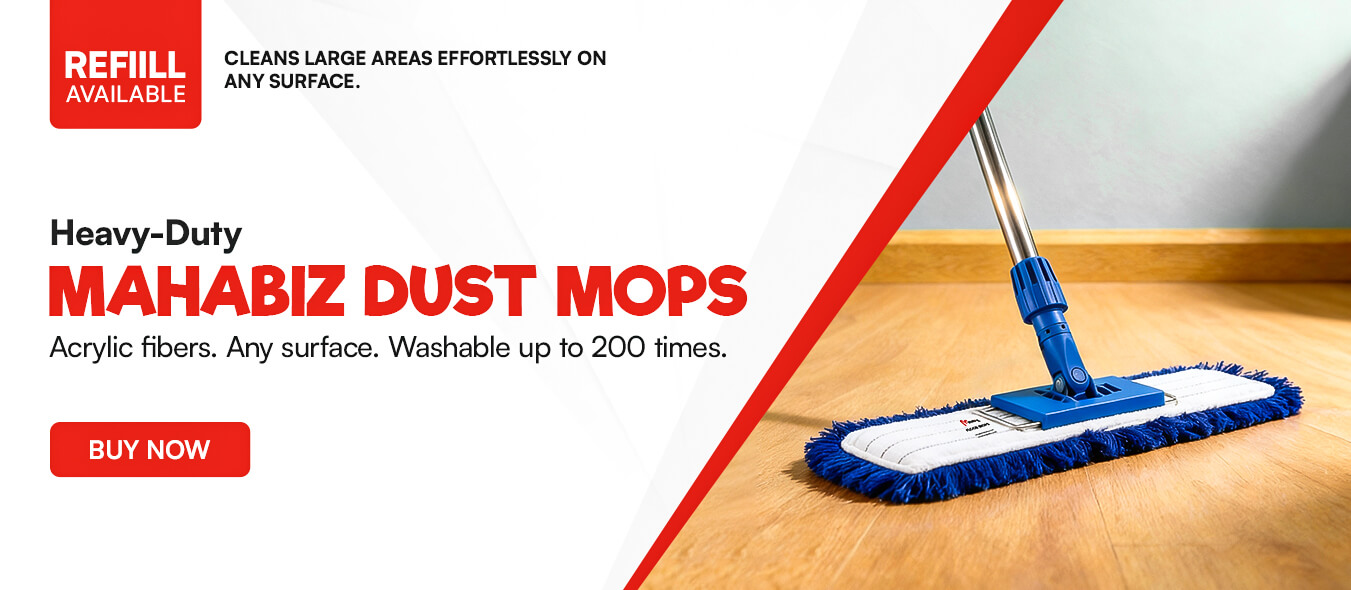
Mahabiz offers a solid range of commercial dry mops across different sizes and specifications, so you’re choosing based on actual fit rather than just grabbing whatever’s available. That match between tool and environment is where the real difference shows up in day-to-day results.
Bottom Line
A dry mop is not a glamorous purchase. It won’t come up in strategy meetings. But walk into a commercial space that uses the right cleaning equipment consistently, and you’ll feel it immediately: the floors are clean, the space feels maintained, and the whole environment communicates professionalism without anyone having to say a word.
That’s what the right tool, used correctly, actually does.