Dust Mops: The Cleaning Tool Your Space Has Been Missing
There’s a difference between a floor that’s been cleaned and a floor that’s actually clean. If you’re still relying on a broom for your daily sweep, you’re probably moving dust around more than you’re removing it. A dust mop fixes that, and once you’ve made the switch, going back feels genuinely backwards.
What Makes a Dust Mop Different
A broom scatters. That’s just the reality of how bristles interact with loose dust and fine particles; they push things around, send debris airborne, and let it settle right back down a few minutes later.
Dust mops work differently. The mop head, typically microfiber or a cotton blend, attracts and traps particles through surface contact rather than sweeping them into the air. One pass and the dust is collected, not redistributed. For anyone cleaning hard floors regularly, that’s a meaningful difference in both effort and result.
Where They Work Best
Dust mops perform well across almost every hard floor surface:
- Hardwood and engineered wood floors, where wet cleaning causes long-term damage and dry maintenance is always the better option.
- Tile and stone where fine dust settles into textured surfaces and grout lines.
- Vinyl and laminate are the most common floorings in Pakistani homes and commercial spaces, where daily dry mopping keeps surfaces looking fresh.
- Marble floors where scratching is a concern and a gentle, effective clean matters.
The key is matching the mop head material to the surface. Microfiber works best on smooth, polished floors. Heavier cotton blends handle rougher surfaces and larger debris more effectively.
Home Use vs. Commercial Use
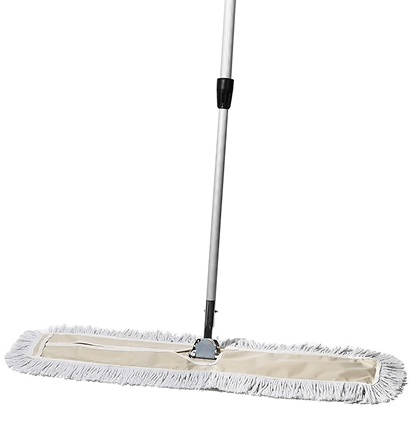
This is a distinction worth making. A dust mop designed for home use is built for lighter, less frequent cleaning. Commercial-grade versions are wider, more durable, and built to handle daily use without breaking down.
For homes, a standard-width mop head covers most rooms efficiently. For larger spaces, offices, clinics, retail stores, and school corridors, a wider commercial head covers more ground per pass and saves significant time across a cleaning cycle.
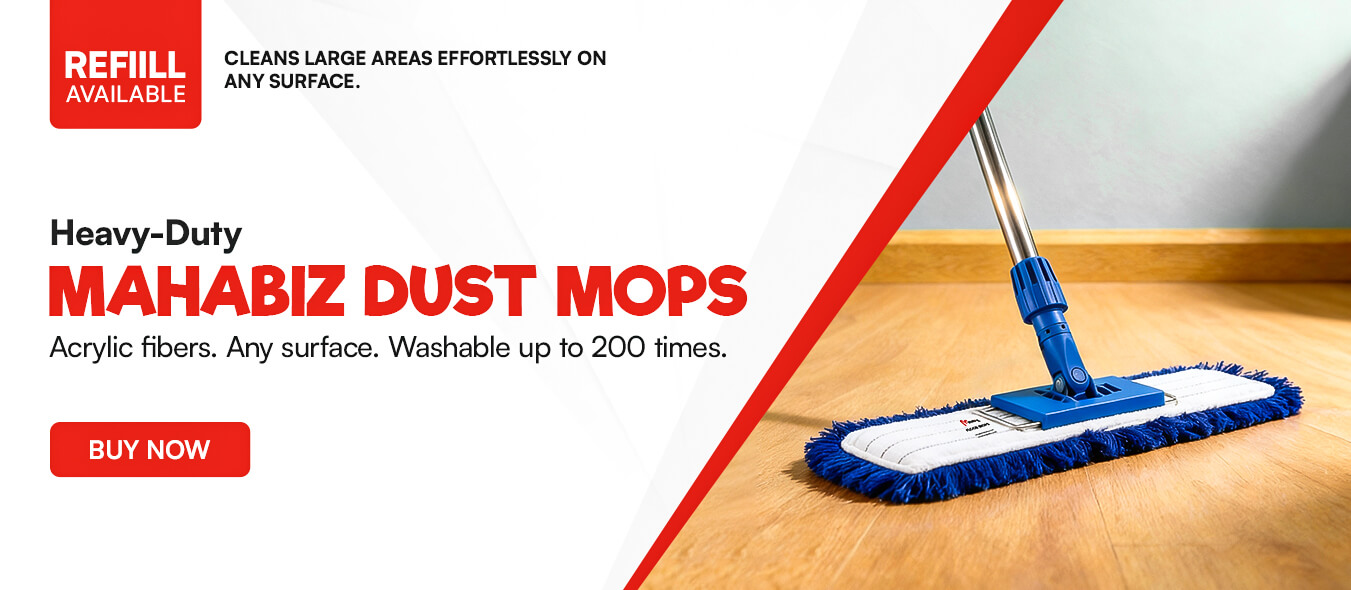
Mahabiz carries dust mops across both categories, so you’re choosing based on what your space actually requires rather than settling for whatever’s available.
Keeping Your Dust Mop Performing
Even the best mop underperforms when it isn’t maintained. A few habits make a real difference:
- Shake the mop head out after every use before debris gets packed into the fibers.
- Wash the head regularly; most microfiber heads are machine washable, which makes this easy.
- Let it dry fully before storing to avoid any mildew buildup.
- Replace the head when the fibers mat down and stop picking up effectively. Holding onto a worn-out head is a false economy that just means dirtier floors.
None of this is complicated. It just requires consistency.
The Right Tool for the Job
Cleaning efficiency is largely about using the right tool for the surface and the scale of the space. A dust mop in the right size, with the right head material, maintained properly, covers ground faster and cleans more thoroughly than a broom ever will, with less effort and less airborne dust in the process.
Mahabiz stocks a solid range across different sizes and specifications, so whether you’re outfitting a home or a commercial space, there’s an option that fits.
Conclusion
Switching to a dust mop is one of those small upgrades that makes an immediate, noticeable difference. Cleaner floors, faster cleaning cycles, and less dust settling back onto surfaces you just cleaned. It’s not a complicated decision; it’s just a better tool doing a better job. Find the right one for your space at Mahabiz and see the difference a proper dust mop makes from the very first use.
FAQs
1.Can dust mops be used on all floor types?
Yes, dust mops work well on hardwood, tile, marble, vinyl, and laminate. The mop head material should match your floor type for the best result.
2.How often should I replace my dust mop head?
When the fibers start to mat down, or the mop stops picking up dust effectively, it’s time to replace the head. With regular washing and proper care, a good-quality head lasts several months of consistent use.
3.Are dust mops better than vacuums for daily cleaning?
For quick daily maintenance on hard floors, a dust mop is faster and less cumbersome than a vacuum. Vacuums are better for deep cleaning carpets and getting into corners. Using both for their respective strengths gives you the best overall result.